
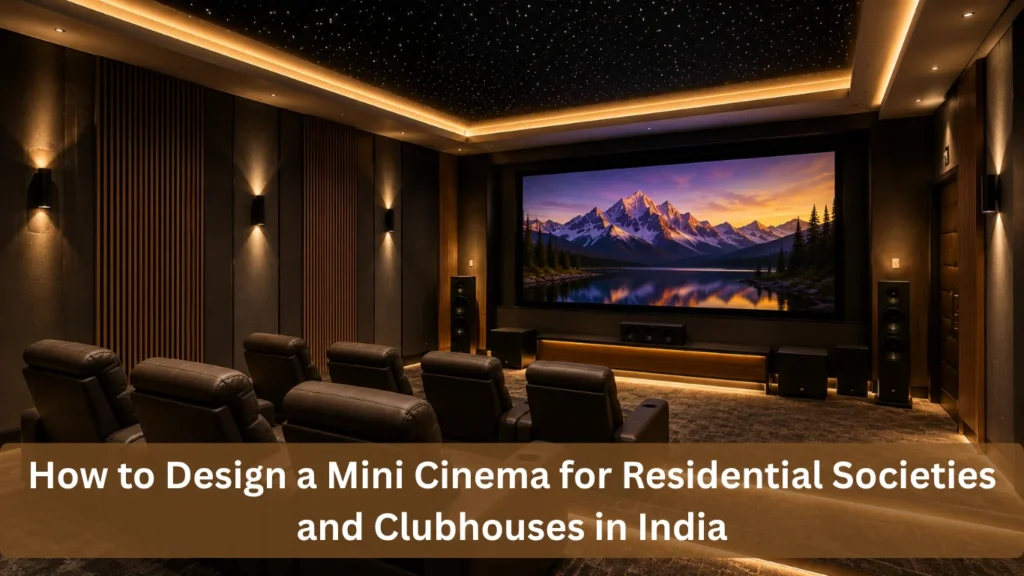
A mini cinema for a residential society or clubhouse is a dedicated entertainment space with a large screen, quality audio, comfortable seating, controlled lighting, and smart technology. When planned correctly, it can be used for movie nights, sports screenings, children’s events, presentations, and community gatherings.
The key is to design the room around screen size, sound quality, acoustics, seating, lighting, ventilation, and easy controls rather than simply purchasing expensive equipment.
What Should a Mini Cinema in a Residential Society Include?
A well-designed residential mini cinema should ideally include:
- A suitable projector or large display
- High-quality surround sound
- Acoustic treatment
- Comfortable seating
- Dimmable lighting
- Reliable electrical infrastructure
- Internet connectivity
- Proper ventilation and air conditioning
- Easy-to-use AV controls
- Optional smart home or building automation
The exact equipment should depend on the room size, number of viewers, budget, and how frequently the space will be used.
How Do You Choose the Right Room for a Mini Cinema?
Room selection is the first important decision.
A rectangular room is generally easier to design because it provides better options for screen placement and seating arrangements. Try to avoid rooms with excessive windows, irregular shapes, or heavy external noise.
Before starting the installation, check:
- Room length, width, and ceiling height
- Number of seats required
- Door and window positions
- Existing electrical points
- Air-conditioning capacity
- Internet availability
- Nearby noise sources
A professional site assessment can help determine whether the room is suitable for a cinema setup.
Is a Projector or Large TV Better for a Clubhouse Cinema?
Both options can work. The right choice depends on the room and intended viewing experience.
A projector is ideal when:
You want a very large image and a more traditional cinema experience.
A large smart display is ideal when:
The room is smaller or receives more ambient light, and you want simple operation.
For larger clubhouses, a projector with a properly sized projection screen can create an immersive viewing experience. For smaller rooms, a large display may provide greater convenience.
How Important Is Sound in a Mini Cinema?
Sound is just as important as the screen.
A large image with poor audio will not feel like a cinema. A suitable surround sound system can create a more immersive experience by placing sound around the audience.
Depending on the room, the system may include:
- Front speakers
- Center speaker
- Surround speakers
- Subwoofer
- AV receiver or processor
Speaker placement should be planned according to the seating arrangement. Simply placing speakers wherever there is space can result in uneven sound.
Why Is Acoustic Treatment Important?
Acoustic treatment helps control sound reflections and echoes inside the cinema room.
Bare walls, glass surfaces, and hard floors can cause sound to bounce around the room. This can make dialogue difficult to understand and reduce overall sound quality.
Suitable acoustic solutions can include:
- Acoustic wall panels
- Carpets
- Curtains
- Sound-absorbing materials
- Properly designed wall and ceiling treatments
For residential societies, acoustic planning is particularly useful because it can also help reduce unwanted disturbance to nearby spaces.
What Type of Seating Should a Society Mini Cinema Have?
Seating should be selected according to the available space and expected audience.
Popular options include:
- Cinema recliners
- Fixed theatre seats
- Comfortable sofas
- Tiered seating for larger rooms
Maintain enough space between rows and provide clear walking paths.
Accessibility should also be considered. Senior citizens and people with mobility requirements should be able to enter, exit, and use the space comfortably.
How Should Lighting Be Designed?
Cinema lighting needs to balance visibility and viewing comfort.
Bright lights can reduce screen visibility, while completely dark rooms can make movement difficult.
A practical setup can include:
- Dimmable ceiling lights
- Low-level wall lighting
- Pathway lighting
- Smart lighting controls
With automation, lights can dim when a movie starts and gradually brighten when the movie ends.
Can Home Automation Be Used in a Mini Cinema?
Yes. Home automation can make a mini cinema much easier to operate.
Instead of using separate remotes for different devices, a centralized automation system can control multiple functions from one interface.
Depending on the requirements, automation can manage:
- Projector or display
- AV system
- Lighting
- Motorized curtains
- Screen
- Streaming devices
- Air conditioning
- Scene-based controls
For example, a single “Movie Mode” can lower the curtains, switch on the projector, activate the AV system, and dim the lights.
This is particularly useful in residential clubhouses where different people may use the cinema throughout the week.
What Electrical and Connectivity Requirements Are Needed?
Good infrastructure should be planned before installing the equipment.
The mini cinema may require dedicated power points, organized cabling, surge protection, network connectivity, and adequate ventilation around electronic equipment.
A stable internet connection is also important if residents will use streaming platforms or online content.
Cable management should not be ignored. Properly concealed and organized wiring makes the room safer, cleaner, and easier to maintain.
How Can You Make a Mini Cinema Easy for Everyone to Use?
A clubhouse cinema may be operated by residents, security staff, facility managers, or event organizers. Therefore, controls should be simple.
A centralized control panel or smart automation interface can reduce complexity. Users should be able to perform common actions such as:
Start movie → Select source → Adjust volume → Control lights → Stop system
without dealing with complicated technical settings.
Simple operation also reduces the risk of equipment being incorrectly configured.
How Much Does a Residential Mini Cinema Cost?
There is no fixed mini-cinema cost because the budget depends on several factors.
The overall investment can vary based on:
- Room size
- Screen or display size
- Projector specifications
- Speaker system
- Acoustic treatment
- Seating
- Lighting
- Automation
- Wiring and installation
- Brand and equipment specifications
Instead of selecting equipment based only on price, residential societies should first define the expected audience, usage, and room requirements. This makes it easier to create a practical budget.
What Are Common Mini Cinema Design Mistakes?
Some common mistakes include:
- Choosing equipment before measuring the room.
- Using an oversized screen for the viewing distance.
- Ignoring room acoustics.
- Installing speakers without considering seating positions.
- Using excessive lighting.
- Forgetting ventilation for AV equipment.
- Leaving cables poorly organized.
- Making the control system unnecessarily complicated.
- Ignoring accessibility.
- Not planning for future upgrades.
Professional planning can help avoid these problems.
How Can the Touch & Feel Electro System Help?
Designing a mini cinema requires more than individual equipment selection. The screen, audio, lighting, automation, wiring, and room design should work as one integrated system.
Touch & Feel Electro System provides integrated technology solutions for entertainment and smart spaces. For residential societies and clubhouses, professional planning can help create a mini cinema that is comfortable, easy to operate, and suited to the available space.
The right approach is to assess the room first and then select technology according to actual requirements.
Frequently Asked Questions
What is the ideal room size for a mini cinema?
There is no universal room size. The ideal dimensions depend on the number of seats, screen size, viewing distance, speaker placement, and available space.
Can a small clubhouse have a mini cinema?
Yes. Even a relatively compact room can be converted into an entertainment space using an appropriately sized display or projector, suitable speakers, comfortable seating, and controlled lighting.
Is acoustic treatment necessary for a mini cinema?
Yes. Acoustic treatment can reduce unwanted reflections and improve dialogue clarity and overall sound quality.
Can the cinema be used for purposes other than movies?
Yes. A clubhouse mini cinema can also be used for sports matches, gaming, presentations, children’s programs, community events, and private screenings.
Is automation worth adding to a residential mini cinema?
Yes, especially when different residents or staff members will operate the room. Automation can simplify control of lighting, AV equipment, curtains, screens, and other connected devices.
Final Takeaway
The best mini cinema for a residential society or clubhouse is not simply a room with a big screen. It is a carefully planned entertainment environment where visuals, sound, acoustics, seating, lighting, connectivity, and automation work together.
Start with the room and its intended use. Then choose the screen, audio system, seating, lighting, and automation according to those requirements. This approach can deliver a better experience while avoiding unnecessary spending.
For residential societies and clubhouses in India, working with an experienced AV and automation professional can make the planning, installation, and future maintenance much easier.
